Andalusia in Eight Days, Seville to Granada

Stefan Terwindt • September 5, 2026


Southern Spain holds a particular pull for travelers who want history, architecture, and food without the frantic pace of a multi-country European sprint. Covering Andalusia in eight days, from Seville to Granada, gives you enough time to absorb three distinct cities without rushing through any of them. This route traces the arc of Moorish, Christian, and modern Spanish culture across roughly 500 kilometers of olive groves, mountain passes, and river valleys. Whether you are celebrating a milestone anniversary, planning a retirement trip, or simply drawn to the idea of standing inside the Alhambra at sunset, this itinerary strikes a balance between substance and rest.


The region has changed in recent years, too: Andalusia's Sustainable Tourism Law now empowers local councils to restrict new holiday rentals and impose fines up to €600,000, which means the character of its historic neighborhoods is being actively protected. That is good news for travelers who want authenticity rather than a district overrun with short-term rental apartments. What follows is a day-by-day framework built on practical logistics, honest cost breakdowns, and the kind of specific advice that comes from having walked these streets firsthand.


Planning Your 8-Day Andalusian Circuit for 2027


An eight-day Andalusian itinerary works best when you resist the temptation to add too many stops. Three cities, thoughtfully paced, will always outperform five cities crammed into the same window. The rhythm we recommend is three nights in Seville, one night in Córdoba, and four nights in Granada, with the final morning reserved for a relaxed departure. This pacing gives you full days in each location rather than half-days lost to check-ins and transit.


Your starting point matters. Seville's San Pablo Airport (SVQ) receives direct flights from major European hubs, and Granada's Federico García Lorca Airport (GRX) offers return connections through Madrid and Barcelona. Flying into one city and out of the other eliminates backtracking entirely, saving you roughly four hours of travel and the cost of a return ticket.


The 500km Route: Seville, Córdoba, and Granada


The distance from Seville to Córdoba is approximately 140 kilometers, and Córdoba to Granada covers another 200 kilometers. The total driving distance is just under 500 kilometers, but you will not cover it all at once. Each leg is short enough to feel manageable: the Seville-to-Córdoba stretch takes about 1 hour 45 minutes by car, while Córdoba to Granada runs roughly 2 hours 30 minutes through the Sierra Subbética countryside. The terrain shifts dramatically as you move east, from the flat Guadalquivir basin into the foothills of the Sierra Nevada.


Stefan Terwindt, our founder at NuVia Travel, often recommends building a lunch stop into the Córdoba-to-Granada drive. The town of Priego de Córdoba, about halfway, has a striking Renaissance fountain and several family-run restaurants serving salmorejo and rabo de toro. These unplanned pauses tend to become favorite memories.


Renfe AVE vs. Car Rentals: A Cost and Speed Evaluation


Spain's high-speed rail network, operated by Renfe, connects Seville to Córdoba in just 45 minutes on the AVE. The Córdoba-to-Granada leg is slower, roughly 2 hours 30 minutes, because the high-speed line does not yet extend fully to Granada. A one-way AVE ticket from Seville to Córdoba costs between €15 and €40 depending on how far in advance you book, while the Córdoba-to-Granada regional service runs €20 to €35.


A rental car, by contrast, offers flexibility but adds complexity. Expect to pay €35 to €55 per day for a mid-size vehicle from Europcar or Sixt, plus fuel and parking. Parking in Seville's old town is notoriously difficult and expensive, sometimes €25 per day in a garage. Our general guidance: take the train between Seville and Córdoba, then rent a car in Córdoba if you want to explore the countryside en route to Granada. If you prefer not to drive at all, private transfers between cities cost €150 to €220 and remove every logistical headache.


Days 1-3: The Moorish Splendor of Seville


Seville rewards slow exploration. Three days here lets you absorb the city's scale without exhausting yourself, which matters particularly in the warmer months. Morning temperatures in April and May hover around 18°C, rising to a comfortable 28°C by afternoon. July and August, however, regularly exceed 40°C, making midday sightseeing genuinely unpleasant. We strongly recommend visiting between late March and early June, or from mid-September through November.


Your first morning should be unhurried. Walk along the Guadalquivir River toward the Torre del Oro, then loop through the Barrio de Santa Cruz. This former Jewish quarter is a tangle of narrow lanes, tiled courtyards, and small plazas where you can sit with a cortado before the crowds arrive. Save your major monument visits for Day 2, when you have adjusted to the city's rhythm.


Navigating the Seville Cathedral and Real Alcázar


The Seville Cathedral is the largest Gothic cathedral in the world, and the Real Alcázar is a functioning royal palace with over 1,000 years of continuous use. Both sit within a five-minute walk of each other, and both require advance tickets. Purchase your cathedral entry online at least two weeks ahead; the €12 general admission includes the Giralda bell tower climb, which offers the best panoramic view in the city.


The Real Alcázar deserves a minimum of two hours. Its gardens alone cover seven hectares, and the Mudéjar palace built for Pedro I in the 1360s contains some of the finest Islamic-influenced tilework in Europe. Timed-entry tickets cost €14.50 and sell out quickly during peak season. Arrive at your assigned slot 10 minutes early and head directly to the Patio de las Doncellas before the next wave of visitors enters.


Flamenco Traditions at Museo del Baile Flamenco


Seville is the spiritual home of flamenco, and experiencing a live performance here carries a weight that tourist-oriented shows in other cities cannot replicate. The Museo del Baile Flamenco, founded by dancer Cristina Hoyos, combines a small museum with nightly performances in an intimate courtyard. Tickets for the evening show run approximately €26 and should be reserved online.


For a more traditional setting, the peñas flamencas (private flamenco clubs) of the Triana neighborhood occasionally open their doors to respectful visitors. These are not staged performances but gatherings where local artists practice and perform for one another. Ask your hotel concierge about current schedules, as they change weekly. The difference between a tablao show and a peña gathering is the difference between watching a concert and sitting in on a rehearsal: both are worthwhile, but the latter stays with you longer.


Day 4: A Córdoba Pitstop at the Mezquita-Catedral


Córdoba functions beautifully as a single-night stop between Seville and Granada. The city's crown jewel, the Mezquita-Catedral, justifies the detour on its own. This 8th-century mosque, converted into a cathedral in the 13th century, contains 856 columns of jasper, onyx, marble, and granite arranged in a forest of red-and-white double arches. The effect is disorienting in the best sense: you lose your bearings inside, which was precisely the architects' intention.


General admission is €13, and the building opens at 8:30 AM on weekdays. Arrive at opening to experience the interior in relative quiet. The morning light filtering through the eastern windows creates shifting patterns across the columns that disappear by midday. After the Mezquita, walk north through the Judería to the Calleja de las Flores, a narrow alley that frames the cathedral's bell tower between whitewashed walls draped in geraniums.


Lunch in Córdoba should include salmorejo, a thicker cousin of gazpacho that originated here. The Taberna Salinas, operating since 1879, serves one of the best versions in the city alongside fried eggplant drizzled with honey. Dinner can be lighter: a plate of Iberian ham and a glass of Montilla-Moriles wine at any bar along the Corredera plaza.


Córdoba's commitment to sustainable tourism practices has helped preserve the intimacy of its historic center. The city feels noticeably less congested than Seville or Granada, particularly in the evenings.


Days 5-8: Reaching the Peaks of Granada


Granada sits at 738 meters elevation, backed by the Sierra Nevada mountains, and the temperature difference from Seville is immediately noticeable. Evenings here are cooler, the air drier, and the light sharper. Four nights in Granada gives you time for the Alhambra, the Albayzín, the Sacromonte, and at least one unhurried day to wander the newer parts of the city around Plaza Bib-Rambla and the Alcaicería silk market.


Granada also maintains a tradition almost unique in Spain: free tapas with every drink order. This is not a marketing gimmick. Walk into most bars, order a caña (small beer) for €2.50, and a plate of food arrives without asking. The portions grow larger with each successive round. A proper tapas crawl through the streets around Plaza Nueva can constitute a full dinner for under €15.


Securing Alhambra Tickets: A 90-Day Booking Strategy


The Alhambra receives approximately 6,600 visitors per day, and tickets for the Nasrid Palaces, the most significant section, sell out weeks or months in advance. The official ticketing site releases entries 90 days ahead at midnight Spanish time. Set a calendar reminder and purchase your tickets the moment they become available, especially if you are traveling between April and October.


Three ticket types exist. The General Visit (€19) includes the Alcazaba, the Nasrid Palaces, and the Generalife gardens. The Gardens and Alcazaba ticket (€10) excludes the Nasrid Palaces. The Night Visit (€10) covers only the Nasrid Palaces after dark. You want the General Visit. Your Nasrid Palaces entry is assigned a specific 30-minute window, and guards enforce it strictly: arrive late and you will not be admitted.


A common mistake is booking a morning Nasrid Palaces slot and then trying to see the entire complex before lunch. The Alhambra grounds are vast. We recommend booking a late-morning Nasrid Palaces slot (11:00 or 11:30), arriving at the Generalife gardens when the complex opens at 8:30, and working your way toward the palaces over several hours.


The Albayzín District and Sacromonte Cave Dwellings


The Albayzín is Granada's oldest neighborhood, a UNESCO World Heritage Site of steep cobblestone streets, carmenes (walled houses with interior gardens), and the Mirador de San Nicolás, which offers the most photographed view of the Alhambra against the Sierra Nevada. Visit the mirador at sunset, but arrive 45 minutes early to claim a spot. Street musicians often perform here in the evenings, and the atmosphere is genuinely special without feeling contrived.


Sacromonte, the hillside neighborhood east of the Albayzín, is home to Granada's Roma community and their famous cave dwellings. Many of these whitewashed caves have been occupied for centuries and now host flamenco zambra performances that blend dance, song, and the acoustics of the cave itself. The Cuevas Los Tarantos and María la Canastera are among the most established venues. Expect to pay €25 to €35 for a show that lasts about an hour.


The Sacromonte Abbey, a 17th-century Benedictine complex at the top of the hill, is worth the uphill walk for its catacombs and its views alone. Few travelers make the climb, which means you will likely have the courtyard to yourself.


Andalusian Hospitality: Paradores vs. Boutique Riads


Spain's Paradores are state-run hotels housed in historic buildings: former monasteries, castles, and palaces converted into comfortable accommodations. Andalusia has several excellent options, and they represent strong value compared to privately owned luxury hotels. A standard double room at a Parador typically costs between €120 and €250 per night, which includes breakfast in many locations.


Boutique riads and smaller independent hotels offer a different experience. Many occupy converted 16th- and 17th-century townhouses with interior courtyards, rooftop terraces, and no more than 15 rooms. The intimacy of these properties appeals to travelers who prefer personal attention over the formality of a larger hotel. Several new boutique properties have opened across southern Spain in recent years, reflecting growing demand for this style of accommodation.


Evaluating Luxury: Parador de Granada vs. Hotel Alfonso XIII


The Parador de Granada occupies a 15th-century convent inside the Alhambra complex itself. Staying here means you can walk the Alhambra grounds after the day visitors have left, an experience that is difficult to replicate. Rooms start at approximately €280 per night, and the property has only 40 rooms, so availability is limited. Book three to four months in advance for peak season.


The Hotel Alfonso XIII in Seville, a Marriott Luxury Collection property, is an entirely different proposition. Built in 1928 in a neo-Mudéjar style, it features a grand central courtyard, a full-service spa, and rooms starting around €350 per night. The hotel sits within walking distance of the cathedral and the Alcázar, making it a strong base for your Seville days.


Both properties justify their cost for a milestone trip, but they serve different purposes. The Parador is about location and exclusivity. The Alfonso XIII is about grandeur and service. If your budget allows only one splurge, NuVia Travel clients who speak five languages and have covered 55 countries - like our founder Stefan - tend to recommend the Parador for its irreplaceable setting inside the Alhambra walls.


Budgeting for Premium Travel in Southern Spain


Andalusia generally offers excellent value for premium travel compared with many other parts of Western Europe, although hotel rates rise considerably during spring, fall and major festivals. A couple staying in well-located four- and five-star hotels, dining at a mix of quality local restaurants and more refined establishments, and including private transfers or guided experiences should budget approximately €400 to €750 per day combined.


For an eight-day trip, a realistic budget for two travelers is:

  • Four- and five-star accommodations, 7 nights: €1,400 to €3,500
  • Meals and drinks: €800 to €1,300
  • Monument tickets and private tours: €400 to €1,000
  • Intercity trains, private transfers or car rental: €250 to €600
  • Taxis, tips and miscellaneous expenses: €200 to €400


The total comes to approximately €3,050 to €6,800 for two people, excluding international flights. Travelers choosing landmark properties, luxury boutique hotels or sought-after Paradores should expect to fall toward the upper end of that range, particularly in Seville, Granada and Ronda.


Private guides can make visits to the Alhambra, the Mezquita and Seville’s major monuments far more rewarding. Budget approximately €250 to €450 per private guided experience, depending on duration, group size, ticket availability and whether transportation is included.


One cost-saving tip: many churches and monuments in Andalusia offer free entry during the first hour of opening or on specific weekday mornings. The Seville Cathedral, for example, is free on Mondays from 8:30 to 9:30 AM. These windows are popular with locals and worth planning around.


Eight days across Seville, Córdoba, and Granada gives you the essential arc of Andalusian history without the fatigue that comes from constant movement. The key is honest pacing: fewer stops, longer stays, and enough margin in each day to follow your curiosity down a side street or linger over a second glass of manzanilla. If you would rather have someone handle the ticketing, transfers, and hotel selection so you can simply show up and enjoy, Start Your Custom Journey with NuVia Travel and we will build this itinerary around your dates, your pace, and your priorities. Southern Spain has a way of slowing you down in the best possible sense. Let it.
LET'S PLAN MY SPAIN VACATION
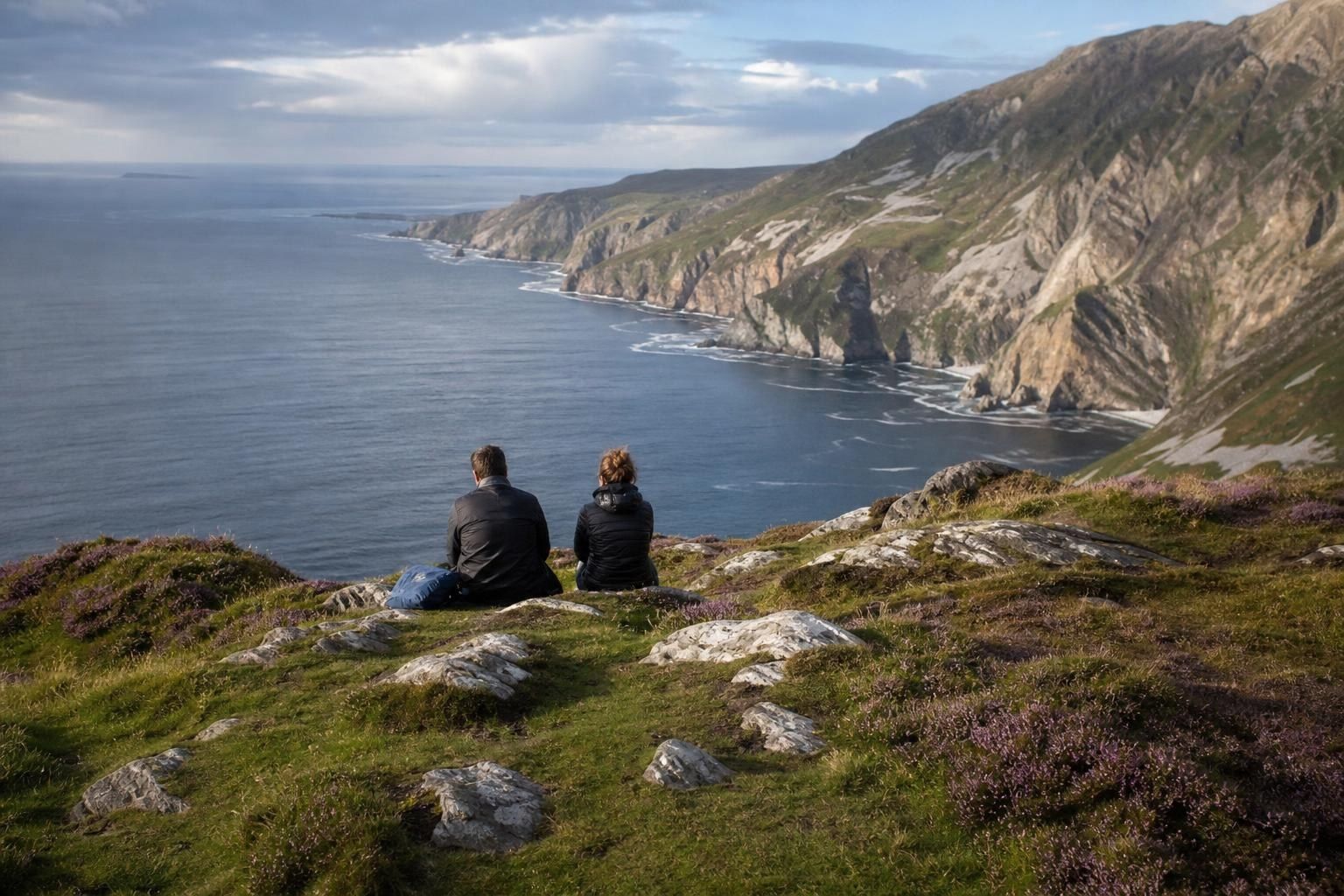
Two people sitting on a grassy cliff overlooking a rocky coastline and calm blue sea
By Stefan Terwindt September 7, 2026
Plan your 2026 Wild Atlantic Way expedition with this expert guide to exploring Ireland's West Coast in seven days, from Cork to the Connemara wilderness.
Person in a yellow beanie and dark coat overlooking icy blue icebergs in a snowy fjord
By Stefan Terwindt September 6, 2026
Compare seasonal costs, weather, and activities with our guide on Iceland in summer or winter and how to choose the perfect time for your Arctic adventure.
Royal Guard in red uniform and black bearskin hat standing outside a guardhouse, Buckingham Palace.
By Stefan Terwindt September 5, 2026
Safety tips and entry requirement for Europe in 2027. Get expert tips & advice for a secure trip. Contact us for personalized planning!
Azure sea with scattered islands, boat traffic, and coastal land under a clear blue sky.
By Stefan Terwindt September 5, 2026
Avoid summer crowds in Europe with tailored trips. Contact NuVia Travel for unique destinations like Douro Valley & Naxos.
A cruise ship offshore near a tropical beach, with a person walking along the shoreline and palm trees nearby.
By Stefan Terwindt September 2, 2026
Discover how to eliminate travel fatigue and maximize regional hubs by following the case for three bases in two weeks on your next 14-day European itinerary.
Person pulling a suitcase down a narrow cobblestone street lined with potted plants and old buildings
By Stefan Terwindt August 31, 2026
Discover what happens after you hire a travel advisor for Europe by exploring the behind-the-scenes research and planning steps that ensure a seamless trip.
Two people reviewing papers at a seaside café with mountains in the background
By Stefan Terwindt August 30, 2026
Discover expert tips for planning a milestone anniversary trip to Europe, from booking premium stays to timing your dream getaway for a truly personal celebration.
Triptych of travel scenes: Colosseum, Florence cathedral, and Venice canal at sunset
By Stefan Terwindt August 21, 2026
Plan the perfect 10-day trip with our guide on how many days you actually need in Rome, Florence, and Venice to balance sightseeing with authentic Italian life.
By Stefan Terwindt August 21, 2026
Choosing between Portugal or Spain for a first trip to Southern Europe is one of the most common questions we hear from travelers planning their initial journey across the Atlantic. Both countries share the Iberian Peninsula, yet they offer distinctly different experiences in terms of scale, cost, culture, and cuisine. The right choice depends on your travel style, your timeline, and what you hope to feel when you return home. Whether you have ten days or three weeks, understanding the practical differences between these two destinations will help you plan a trip that fits your pace and priorities rather than leaving you overwhelmed by too many options. Evaluating Portugal vs. Spain: A 2027 Travel Framework Comparing Portugal and Spain requires more than reading a few blog posts about Lisbon nightlife or Barcelona architecture. These are two sovereign nations with distinct languages, currencies of pride (though both use the euro), and radically different approaches to daily life. A useful framework starts with three practical questions : How much ground do you want to cover? How complex are the logistics? And how comfortable are you with a country where English is not always the default? Spain is the larger, more internationally recognized destination. The country received 42.5 million international travelers in the first half of 2025 alone, representing a 13.3% increase over the prior year. That popularity means excellent infrastructure but also significant crowds at peak sites . Portugal, by contrast, draws roughly a quarter of Spain's visitor numbers, which translates to shorter lines, more authentic local interactions, and a pace that suits travelers who prefer depth over breadth. Size and Scale: 35,000 Square Miles vs. 195,000 Square Miles Portugal is roughly the size of the U.S. state of Indiana. Spain is more than five times larger, comparable to Texas. This distinction matters enormously for first-time visitors to Southern Europe. In Portugal, you can visit Lisbon, take a day trip to the fairy-tale palaces of Sintra, spend two nights in the Douro Valley wine region, and finish in Porto, all within a single week without feeling rushed. The distances between major points of interest rarely exceed three hours by car or train. For couples or retirees who prefer a relaxed pace, this compact geography is a genuine advantage. Spain demands more planning and more transit time. A trip from Madrid to Seville covers roughly 530 kilometers. Adding Barcelona means either a domestic flight or a lengthy train ride across the country. You can absolutely build a wonderful Spanish itinerary, but it requires more careful scheduling, and first-time international travelers sometimes underestimate how tiring constant movement becomes after the first week. Ease of Logistics: Comboios de Portugal vs. Renfe AVE High-Speed Rail Spain's Renfe AVE high-speed rail network is one of Europe's finest. The Madrid-to-Seville route takes just 2.5 hours at speeds exceeding 300 km/h. Connections between Madrid, Córdoba, Málaga, and Barcelona are frequent and reliable. If you are comfortable booking train tickets online (Renfe's website has improved significantly in recent years), Spain's rail system makes multi-city itineraries practical. Portugal's Comboios de Portugal (CP) network is smaller and slower but perfectly adequate for the country's compact size. The Lisbon-to-Porto Alfa Pendular service covers the distance in about 2 hours and 40 minutes. Regional trains connect smaller cities like Coimbra and Aveiro. The system is less complex to figure out, which matters if you are managing logistics for the first time in a foreign country. For travelers who prefer not to handle train bookings and airport transfers independently, working with a travel advisory like NuVia Travel can remove that friction entirely. Stefan Terwindt has planned itineraries across both countries extensively, often recommends Portugal for clients who want a less stressful introduction to European rail travel. Budget and Cost Comparison: Daily Spend Expectations Money is not everything, but it shapes what kind of trip you can realistically build. Both Portugal and Spain offer strong value compared to destinations like France, Switzerland, or Scandinavia, yet there are meaningful differences between the two. Average Daily Costs: Why Portugal Remains 15-20% More Affordable A comfortable daily budget in Portugal for two travelers, covering a quality hotel, meals at local restaurants, transportation, and one activity or entrance fee, runs approximately €300 to €500 per day in 2026. The same standard of experience in Spain typically costs €400 to €700 per day. That 15-20% gap adds up quickly over a ten-day trip. Dining is where Portugal's affordability becomes most noticeable. A full dinner for two with wine at a respected Lisbon restaurant might cost €50 to €70. A comparable meal in Madrid or Barcelona often runs €70 to €100. Coffee, pastries, and casual lunches follow a similar pattern. A pastel de nata with an espresso at a Lisbon cafe costs under €3. The Spanish equivalent, a café con leche with a pastry, runs closer to €4 to €5 in major cities. Wine is another area where Portugal punches above its weight. A bottle of excellent Douro red at a restaurant might cost €15 to €25. Spanish Rioja of similar quality often starts at €20 to €35 in restaurant settings. Accommodation Value: Pousadas de Portugal vs. Paradores of Spain Both countries operate government-affiliated networks of historic properties converted into hotels. Spain's Paradores and Portugal's Pousadas occupy castles, monasteries, and palaces, offering character and history that chain hotels simply cannot match. Spain operates roughly 97 Paradores across the country. Nightly rates typically range from €200 to €500 depending on location and season. The Parador de Granada, set within the Alhambra complex itself, is one of the most sought-after hotel rooms in all of Europe. Portugal's Pousada network is smaller, with around 35 properties. Rates tend to run €150 to €300 per night, making them slightly more accessible. The Pousada de Óbidos, housed inside a medieval castle in a walled town north of Lisbon, is a particular favorite among NuVia Travel clients celebrating anniversaries or milestone birthdays. Both networks reward advance booking. If a Pousada or Parador stay appeals to you, reserving three to six months ahead is wise, especially for the most popular properties during spring and fall shoulder seasons. Cultural Identity and Heritage Sites Portugal's Maritime Legacy and Manueline Architecture Portugal's cultural identity is inseparable from the sea. The Age of Discovery, when Portuguese explorers charted routes to India, Brazil, and the Spice Islands, left a permanent mark on the country's architecture, cuisine, and national character. You will feel this most powerfully in Belém, a Lisbon neighborhood where the Jerónimos Monastery and the Tower of Belém stand as monuments to that era. Manueline architecture, a uniquely Portuguese style from the late 15th and early 16th centuries, blends Gothic structure with maritime motifs: ropes, coral, anchors, and armillary spheres carved into stone. The Monastery of Batalha, about 120 kilometers north of Lisbon, is one of the finest examples. Its Unfinished Chapels are open to the sky, creating an effect that photographs cannot fully capture. Fado music is another pillar of Portuguese identity. Originating in Lisbon's Alfama district, fado is a genre built on saudade, a word with no direct English translation that conveys longing, melancholy, and bittersweet memory. Hearing fado performed live in a small Alfama restaurant is one of the most emotionally resonant experiences available to travelers in Southern Europe. Spain's Moorish History and UNESCO Icons like the Alhambra Spain's cultural layers run extraordinarily deep. Nearly 800 years of Moorish rule (711 to 1492) left architectural and culinary influences that distinguish Spain from every other Western European country. The Alhambra in Granada, with its intricate geometric tilework and serene courtyards, remains one of the most visited monuments on the continent. Tickets regularly sell out weeks in advance, so planning ahead is essential. Spain holds 49 UNESCO World Heritage Sites, the third-highest count of any nation on earth. From the Sagrada Família in Barcelona to the historic center of Córdoba, these sites span Roman, Moorish, Gothic, and modernist traditions. A single trip cannot cover them all, which is precisely why many travelers return to Spain multiple times. The regional diversity of Spanish culture is also striking. Catalonia, the Basque Country, Andalusia, and Galicia each maintain distinct languages, cuisines, and traditions. This variety is a strength, but it also means that a trip focused solely on Madrid and Barcelona will miss much of what makes Spain genuinely interesting. Culinary Landscapes and Nightlife Vibes Food is often the deciding factor for travelers choosing between these two countries, and both deliver experiences that will reshape how you think about European cuisine. The Tapas Culture vs. Hearty Atlantic Seafood Traditions Spain's tapas tradition is famous for good reason. The ritual of moving between bars, ordering small plates of jamón ibérico, patatas bravas, gambas al ajillo, and croquetas, is one of the great pleasures of European travel. In cities like San Sebastián, the Basque version called pintxos reaches an art form, with bars displaying dozens of small bites on toothpicks along the counter. San Sebastián holds more Michelin stars per capita than almost any city in the world. Portugal's culinary identity is more focused and Atlantic-driven. Bacalhau (salt cod) is the national obsession, prepared in reportedly over 365 different ways. Grilled sardines are a summer staple, especially during Lisbon's June festival of Santo António. The seafood rice dishes, particularly arroz de marisco, are rich, saffron-tinged, and deeply satisfying. Spanish nightlife starts late. Dinner at 10 PM is standard, and bars stay open well past midnight even on weekdays. If you are accustomed to eating at 6:30 PM and winding down by 9, this rhythm requires adjustment. Portugal's dining schedule is earlier by comparison, with most restaurants filling between 7:30 and 9 PM, a pace that many first-time visitors to Southern Europe find more comfortable. Best Regional Routes for First-Time Visitors A great itinerary is not about seeing the most. It is about seeing the right things at the right pace. Both countries offer logical routes that minimize backtracking and maximize variety. The Lisbon-Sintra-Porto Triangle via TAP Air Portugal TAP Air Portugal operates direct flights from several major U.S. cities, including Newark, Boston, Miami, and Washington Dulles, with Lisbon as its hub. This makes Portugal exceptionally convenient for American travelers. You land in Lisbon, and your trip begins immediately. A strong seven-to-ten-day Portugal itinerary might look like this: Three nights in Lisbon: Alfama, Belém, and the Time Out Market One day trip to Sintra for the Pena Palace and Quinta da Regaleira Two nights in the Douro Valley for wine tastings and river views Two to three nights in Porto for port wine cellars, the Livraria Lello bookshop, and the Ribeira waterfront Optional extension to the Algarve coast for two nights of beach time This route works beautifully by train and rental car. The distances are short, the logistics are straightforward, and the variety between urban, rural, and coastal settings keeps the trip feeling fresh. The Madrid-Seville-Barcelona Route via Iberia Airlines Iberia Airlines and its low-cost subsidiary Iberia Express connect Spain's major cities efficiently. A classic first-time Spain route covers three distinct regions: Three nights in Madrid: the Prado Museum, Retiro Park, and the neighborhoods of Malasaña and La Latina Two to three nights in Seville: the Alcázar, the Cathedral, and flamenco performances in Triana Optional one night in Córdoba en route (the Mezquita alone justifies the stop) Three nights in Barcelona: the Sagrada Família, Park Güell, and the Gothic Quarter This itinerary covers roughly 12 to 14 days if you include Córdoba and allow for a relaxed pace. The Madrid-to-Seville AVE train is fast and comfortable. The Seville-to-Barcelona leg is best handled by a short domestic flight, as the train connection is indirect. The trade-off is clear: Spain's route covers more ground and more cultural variety, but it also demands more energy and more transit days. Portugal's triangle is tighter, simpler, and better suited to travelers who want to unpack once or twice and settle into a rhythm. The Final Verdict: Which Country Fits Your Travel Style? Portugal is the better choice if you want a compact, manageable first experience in Southern Europe. The country rewards slow travel, offers excellent value, and presents fewer logistical challenges. Its food is hearty and honest, its people are warm, and its scale means you will not spend half your trip on trains and planes. For couples celebrating a milestone or retirees making their first transatlantic journey, Portugal delivers a deeply satisfying trip without the overwhelm. Spain is the right pick if you have at least 12 days, you enjoy variety and stimulation, and you are comfortable with a faster pace. The cultural depth is staggering, the food scene is world-class, and the regional differences between Andalusia, Catalonia, and Castile make it feel like visiting three countries in one. Spain rewards repeat visits, so even if you do not see everything the first time, you will have a strong foundation to build on. Neither choice is wrong. Both countries will change how you think about food, history, and daily life. The question is simply which experience matches where you are right now as a traveler. If you are ready to start shaping your first Southern European itinerary with an advisor who knows both countries intimately, Start Your Custom Journey with NuVia Travel. We will handle the logistics, vet the hotels, and build a trip paced to how you actually want to travel.
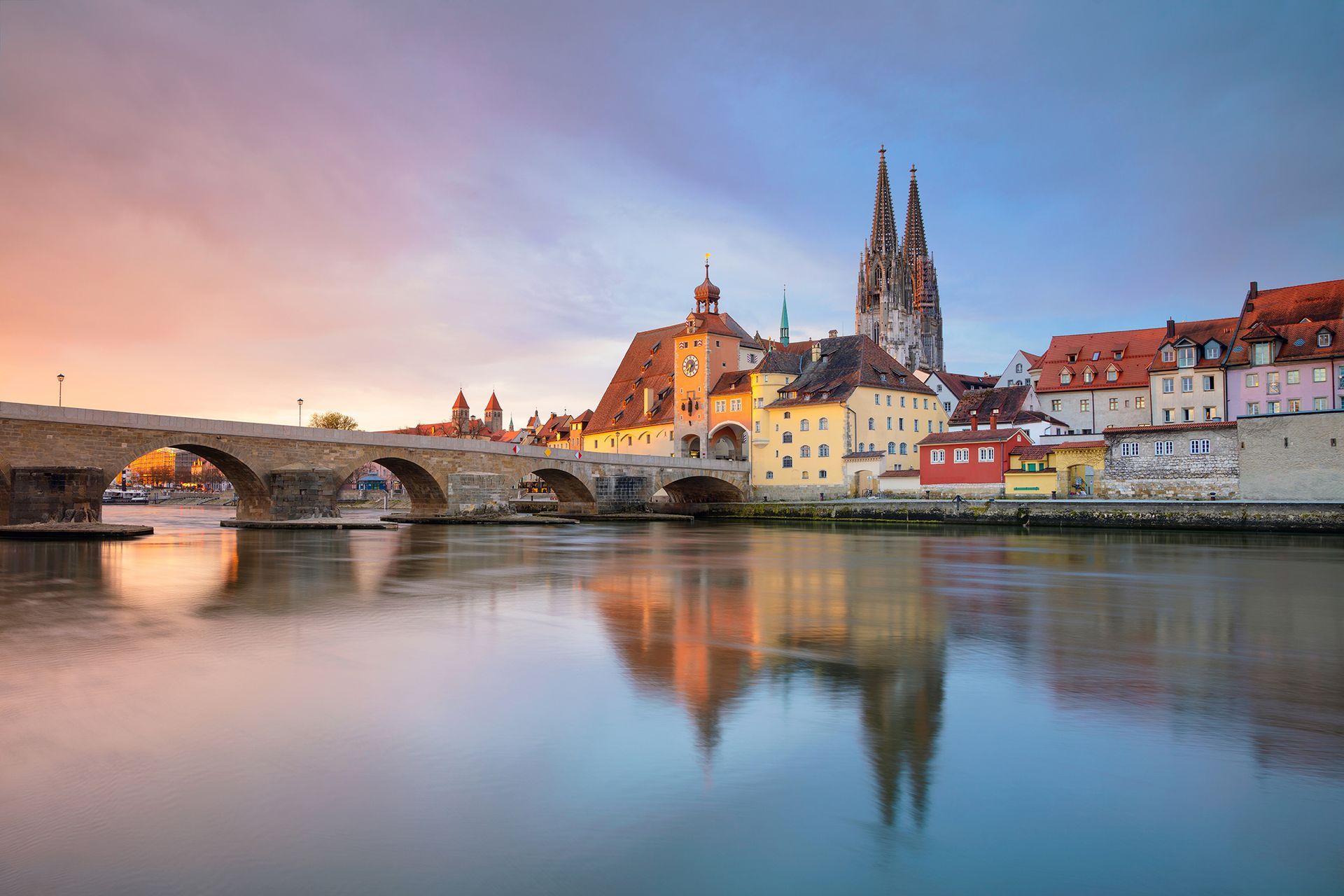
Riverside town with twin church spires, colorful buildings, and boats on a cloudy day
By Stefan Terwindt August 20, 2026
Compare castles, capitals, and costs to decide between the Rhine or Danube for a first European river cruise with this expert guide to lines and itineraries.