How to Split Ten Days Between Paris and the South of France
Ten days in France is generous enough to feel unhurried yet short enough to demand smart planning. The question most travelers wrestle with is not whether to visit both Paris and the south, but how to split ten days between Paris and the south of France without shortchanging either region. France welcomed a record 102 million international visitors in 2025, and that popularity means your itinerary needs structure, advance reservations, and realistic pacing. The framework we use at NuVia Travel gives you four full days in Paris and six in the south, a ratio that accounts for transit time, jet lag recovery, and the distinct rhythms of each region. What follows is a practical, day-by-day guide to making that split work.
Mastering the 10-Day French Split: The 4-Day Paris and 6-Day Riviera Framework
A 10-day trip to France sounds like a lot of time until you start mapping it against the sheer density of things worth seeing. Paris alone could fill two weeks. Provence and the Côte d'Azur could fill another two. The key is accepting that you are not trying to see everything; you are trying to see the right things at a pace that feels comfortable rather than frantic.
The 4-day/6-day split works because Paris is compact and walkable. You can cover its essential neighborhoods, museums, and dining experiences in four focused days. The south, by contrast, is geographically spread out. Driving from Nice to the hilltop villages of the Luberon takes nearly three hours. Day trips to Monaco, Èze, Saint-Paul-de-Vence, or the lavender fields near Valensole require a car and time on winding roads. Six days gives you room to explore without turning your trip into a highway marathon.
Why the 40/60 Ratio Optimizes Travel Time in 2024
Jet lag is real, and it hits hardest on days one and two. Starting in Paris means you can ease into your trip with café mornings, gentle walks along the Seine, and an early dinner at a neighborhood bistro. By day three, your body clock has adjusted, and you are ready for the Louvre or a full day in Versailles.
Shifting south on day five puts you in a different mode entirely. The pace slows. Mornings start with market visits. Afternoons involve rosé on a terrace overlooking the Mediterranean or a quiet courtyard in Gordes. This natural rhythm, city energy followed by southern relaxation, mirrors how most travelers actually want to feel during a trip. It is also why we rarely recommend the reverse order; arriving jet-lagged in a rural village with limited restaurant hours and no walkable attractions can feel isolating rather than restful.
Budgeting for Two Regions: Average Daily Costs for Mid-Range vs. Luxury
Your daily spending will shift noticeably between Paris and the south. A mid-range traveler in Paris, staying in a well-located four-star hotel, eating one fine meal per day, and visiting two to three attractions, should expect to spend roughly €350 to €500 per person per day. That includes lodging, meals, museum entry, and local transport.
The south of France offers more range. A boutique hotel in Nice or Antibes runs €180 to €350 per night, while a premium villa rental in the Luberon might cost €400 to €600 per night but sleeps four to six guests comfortably. Daily spending on food tends to drop slightly outside Paris, with excellent three-course lunches available for €25 to €40 per person in smaller towns like Lourmarin or Bonnieux. France's tourism economy generates significant revenue precisely because travelers find compelling options across every budget tier.
For a couple on a mid-range trip, a reasonable total budget for 10 days falls between €7,000 and €10,000, including flights from the U.S. Premium travelers should plan for €12,000 to €18,000 depending on hotel choices and dining frequency.
Days 1-4: Maximizing a Short Stay in the City of Light
Four days in Paris is not a compromise. It is a well-paced introduction that leaves you wanting to return, which is exactly how Paris should feel. The trick is geographic clustering: grouping your activities by neighborhood so you spend your time experiencing the city rather than riding the Métro.
Day one should be intentionally light. Walk the Marais, browse the Place des Vosges, have lunch at a corner brasserie, and let yourself get lost in the side streets. Day two is your big museum day. Day three can be devoted to Versailles or Montmartre and the Sacré-Cœur, depending on your interests. Day four is your wildcard: a food tour, a Seine river cruise, shopping along Rue du Faubourg Saint-Honoré, or simply returning to a neighborhood you loved.
Navigating the Arrondissements: Where to Stay for Efficiency
Your hotel location determines how much of Paris you actually see. We consistently recommend three areas for first-time visitors:
- The 1st and 2nd arrondissements (near the Tuileries and Palais Royal) put you within walking distance of the Louvre, Musée de l'Orangerie, and excellent dining along Rue Montorgueil.
- The 6th and 7th arrondissements (Saint-Germain-des-Prés and the Eiffel Tower district) offer a quieter, more residential feel with easy access to the Musée d'Orsay and the Rodin Museum.
- The Marais (3rd and 4th arrondissements) is ideal for travelers who want walkability, boutique shopping, and proximity to Île de la Cité and Notre-Dame, which has undergone a significant restoration and reopened to visitors.
Avoid hotels near the Champs-Élysées unless you specifically want that area. The surrounding blocks are heavy on chain restaurants and tourist-oriented shops, and the Métro connections are no better than what you will find in the neighborhoods above.
Securing Fast-Track Entry for the Louvre and Musée d'Orsay
Timed-entry tickets are not optional in 2026. They are essential. The Louvre requires advance booking, and popular time slots (10:00 a.m. to 1:00 p.m.) sell out weeks ahead during peak season. Book your Louvre ticket for 9:00 a.m. or 3:00 p.m. to avoid the worst crowds. Enter through the Passage Richelieu entrance rather than the main pyramid for shorter security lines.
The Musée d'Orsay also uses timed entry. Wednesday and Friday evenings, when the museum stays open until 9:45 p.m., are the least crowded windows. The Impressionist galleries on the upper floor are worth prioritizing if your time is limited.
For Versailles, purchase your ticket through the official château website and arrive before 9:00 a.m. The gardens are free to enter on most days, but the musical fountain shows on weekends require a separate ticket. Stefan Terwindt, NuVia Travel's founder, often advises clients to visit Versailles on a Tuesday or Wednesday, when the crowds thin considerably compared to weekends.
Transit Logistics: Comparing SNCF TGV InOui vs. Air France Domestic Flights
The journey from Paris to the south of France is itself a decision point. You have two practical options: the high-speed TGV train or a domestic flight. Each has trade-offs worth understanding before you book.
A domestic flight from Paris-Orly or Charles de Gaulle to Nice takes about 90 minutes in the air. But factor in the taxi to the airport (45 minutes from central Paris), the recommended two-hour early arrival for security, and the transfer from Nice airport to your hotel, and you are looking at five to six hours door to door. The flight costs between €80 and €200 per person one way, depending on how far in advance you book.
The TGV, by comparison, departs from Gare de Lyon in central Paris and arrives at Nice-Ville station in the heart of the city. The total travel time is longer on paper, but the experience is dramatically more comfortable, and you skip the airport entirely.
The 5-Hour Rail Journey: Gare de Lyon to Nice Ville
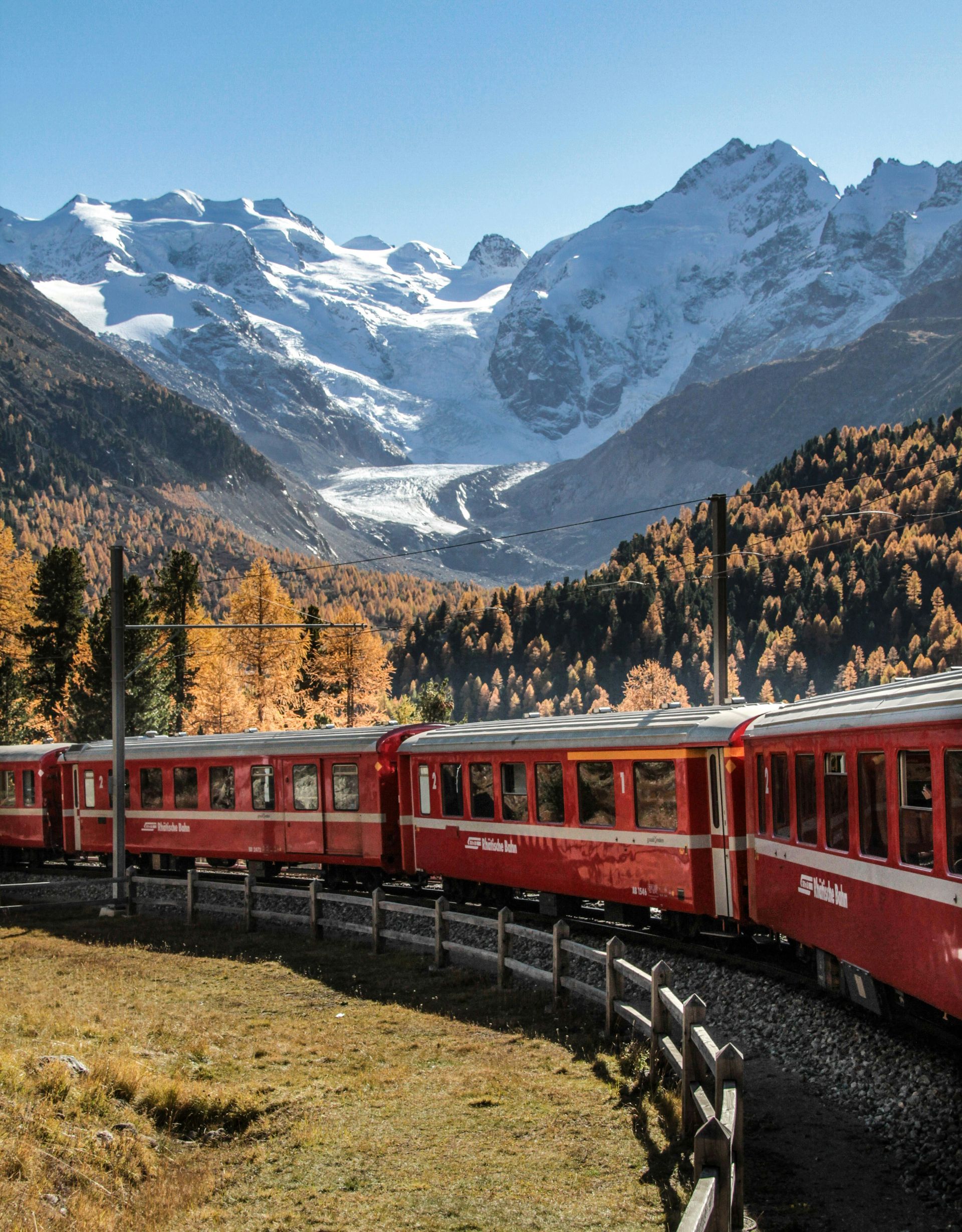
The TGV InOui from Paris to Nice runs multiple daily departures and covers the distance in approximately five hours and 40 minutes. First-class tickets, which include wider seats, power outlets, and a quieter car, typically range from €90 to €150 when booked four to six weeks ahead. Second class runs €50 to €90.
The scenery alone justifies the train. After the first two hours of farmland, the route curves along the southern coast, offering views of the Mediterranean that no airplane window can match. You can work, read, nap, or simply watch the landscape shift from Burgundy's rolling hills to the red-roofed towns of the Var.
Pack lunch from a Parisian bakery before boarding. The onboard café car is adequate but uninspired, and a good baguette sandwich from Maison Landemaine or Poilâne makes the journey feel like an extension of your Paris experience rather than a transit chore.
Renting a Car with Sixt or Europcar for Provençal Flexibility
If your southern days include Provence, the Luberon, or any destination beyond the coastal rail line, you will need a car. We recommend picking one up at Nice-Ville station or Nice airport rather than driving from Paris, which adds unnecessary highway hours and toll costs (roughly €80 each way on the A6/A7 autoroute).
Sixt and Europcar both operate counters at Nice-Ville and the airport. A compact automatic, which is important to specify since manual transmission is still the default in France, runs €45 to €70 per day. Reserve at least three weeks ahead during summer months.
A few practical notes on driving in Provence:
- GPS is essential. Many village roads are unmarked, and signage can be inconsistent outside major routes.
- Fuel stations in small towns close by 7:00 p.m. Fill up in larger towns like Aix-en-Provence or Avignon.
- Parking in hilltop villages like Gordes, Roussillon, and Ménerbes is limited. Arrive before 10:00 a.m. in summer or expect a 15-minute walk from overflow lots.
Days 5-10: Choosing Your South of France Base Camp
Six days in the south gives you enough time to establish a rhythm. The most important decision is where to base yourself, and this choice shapes the entire second half of your trip. The two main options, the Riviera coast and inland Provence, offer genuinely different experiences.
You do not need to choose exclusively. Some travelers split their southern days, spending three nights in Nice and three in a Luberon village. This works well if you do not mind one additional hotel change and a two-and-a-half-hour drive between the two areas. But if you prefer to unpack once and explore from a single base, pick the option that matches your travel personality.
Option A: The French Riviera Glamour of Nice and Monaco
Nice is the strongest base for Riviera exploration. The Promenade des Anglais, the Old Town (Vieux Nice), and the Cours Saleya flower market are all walkable from most hotels. From Nice, you can take day trips by train or car to:
- Monaco and Monte Carlo (20 minutes by train), where the Oceanographic Museum and the Prince's Palace courtyard are worth your time even if you skip the casino.
- Èze Village (15 minutes by car), a medieval hilltop town with panoramic coastal views and the Jardin Exotique.
- Antibes and Cap d'Antibes (25 minutes by train), home to the Picasso Museum and some of the coast's best swimming spots.
- Saint-Paul-de-Vence (30 minutes by car), a walled village with the Fondation Maeght, one of Europe's finest modern art collections.
Hotel costs in Nice are generally lower than Paris for comparable quality. A well-located four-star hotel near the Promenade runs €180 to €300 per night in shoulder season and €250 to €400 in July and August.
Option B: The Rustic Charm of Provence and the Luberon Valley
If your ideal afternoon involves a glass of Côtes du Rhône at a stone farmhouse table with lavender fields in the distance, Provence is your answer. The Luberon Valley, about 90 minutes north of Marseille, contains some of France's most photogenic villages: Gordes, Bonnieux, Lourmarin, and Ménerbes among them.
Base yourself in or near Lourmarin for the best combination of restaurants, a lively Friday market, and central access to the rest of the valley. Alternatively, a countryside mas (traditional stone farmhouse) rental outside Gordes offers total privacy and the kind of quiet that makes you forget your phone exists.
Day trips from a Luberon base include Aix-en-Provence (45 minutes), with its plane-tree-lined Cours Mirabeau and Cézanne's studio; Avignon (one hour), where the Palais des Papes remains one of the most impressive medieval structures in Europe; and the Pont du Gard (75 minutes), the astonishingly well-preserved Roman aqueduct that justifies the drive on its own.
The Provençal approach works especially well for couples celebrating an anniversary or milestone, where the point of the trip is not to see as many things as possible but to slow down and enjoy where you are. France's diverse regional tourism offerings mean that even a small geographic area like the Luberon can fill six days without repetition.
Essential Booking Checklist for a 2027 Multi-City Itinerary
A trip with this many moving parts, two cities, one transit day, potential car rental, timed museum entries, and restaurant reservations, benefits from a clear booking sequence. Here is the order we recommend:
- Book transatlantic flights first, ideally seven to nine months ahead for the best fares on Delta, Air France, or United nonstops to Paris CDG.
- Reserve your Paris hotel within a week of booking flights. Properties in the 6th and 7th arrondissements sell out quickly for peak season.
- Purchase TGV tickets four to six weeks before departure through SNCF Connect. First-class fares rise sharply inside the 30-day window.
- Book your southern France accommodation. For Riviera hotels, three to four months ahead is sufficient. For Luberon villa rentals, six months is safer.
- Reserve timed-entry museum tickets (Louvre, Orsay, Versailles) as soon as your dates are confirmed. These are the first things to sell out.
- Arrange your car rental if heading to Provence. Automatic-transmission vehicles have limited inventory and disappear fast.
- Make dinner reservations for any specific restaurants you have your heart set on. Popular spots in Paris and Nice book up two to four weeks ahead.
This sequence matters because each booking depends on the one before it. Your hotel location determines which museum days make geographic sense. Your TGV departure time determines when you need to check out. Each piece connects.
Planning a 10-day France itinerary with multiple regions, transit modes, and reservation windows is exactly the kind of trip where working with an experienced advisor saves you both time and costly mistakes. If you would rather hand off the logistics and focus on the anticipation, start your custom journey with our team. We will build your itinerary around your pace, your interests, and the details that turn a good trip into one you talk about for years.