Iceland Summer or Winter, How to Choose
Iceland pulls at travelers in a way few destinations can. Fire and ice, volcanoes and glaciers, geothermal pools steaming under open skies. But the single question that stalls more trip planning than any other is whether to visit in summer or winter. Each season delivers a fundamentally different country, and the right choice depends on what you want to see, how you want to move through the landscape, and what kind of discomfort you are willing to tolerate.
This is not a matter of one season being objectively better. It is a matter of fit. Your fitness level, your tolerance for cold and darkness, your budget, and whether you would rather chase the northern lights or watch puffins waddle along coastal cliffs all factor into this decision.
We have helped clients at NuVia Travel plan Iceland trips in every month of the year, and the honest truth is that both seasons reward you, just in very different currencies.
Iceland Summer or Winter: A Seasonal Decision Matrix
Choosing between Iceland in summer and Iceland in winter comes down to five variables: daylight, access, wildlife, cost, and atmospheric phenomena. Rather than treating this as a vague preference question, consider it through a structured lens.
- Daylight: Summer offers 20 to 24 hours of light from late May through July. Winter delivers as few as 4 to 5 hours of pale daylight in December and January.
- Access: Summer opens the Highland interior, remote fjords, and unpaved routes. Winter restricts travel primarily to the Ring Road and the Golden Circle.
- Wildlife: Puffins, whales, and Arctic foxes with summer coats appear from May through August. Winter brings reindeer sightings in the east and seals on ice.
- Cost: Summer is peak season with higher airfare, accommodation rates, and rental car fees. Winter is generally 20 to 40 percent less expensive, though ice cave tours and northern lights excursions carry their own costs.
- Atmospheric phenomena: The midnight sun belongs exclusively to summer. The aurora borealis belongs to winter, roughly September through March.
This matrix is not exhaustive, but it captures the core tradeoffs. A couple celebrating a 30th anniversary may want the long golden light of a June evening on Reynisfjara beach. A retired pair with flexible schedules might prefer the solitude and spectacle of February's ice caves. The right season is the one that aligns with your priorities, not the one that Instagram currently favors.
Stefan Terwindt, the founder of NuVia Travel, often reminds clients that Iceland is one of the few destinations where the season you choose essentially determines which country you visit. Summer Iceland and winter Iceland share a geography but almost nothing else.
Summer in Iceland: The Land of the 24-Hour Midnight Sun
Summer in Iceland runs roughly from late May through early September, though June and July represent the true peak. The midnight sun phenomenon, where the sun barely dips below the horizon, transforms your daily rhythm. You will find yourself eating dinner at 10 PM and still squinting against golden light at midnight. This extended daylight is not just a novelty. It is a practical advantage that lets you cover more ground, stop more often, and photograph landscapes in soft, angled light for hours on end.
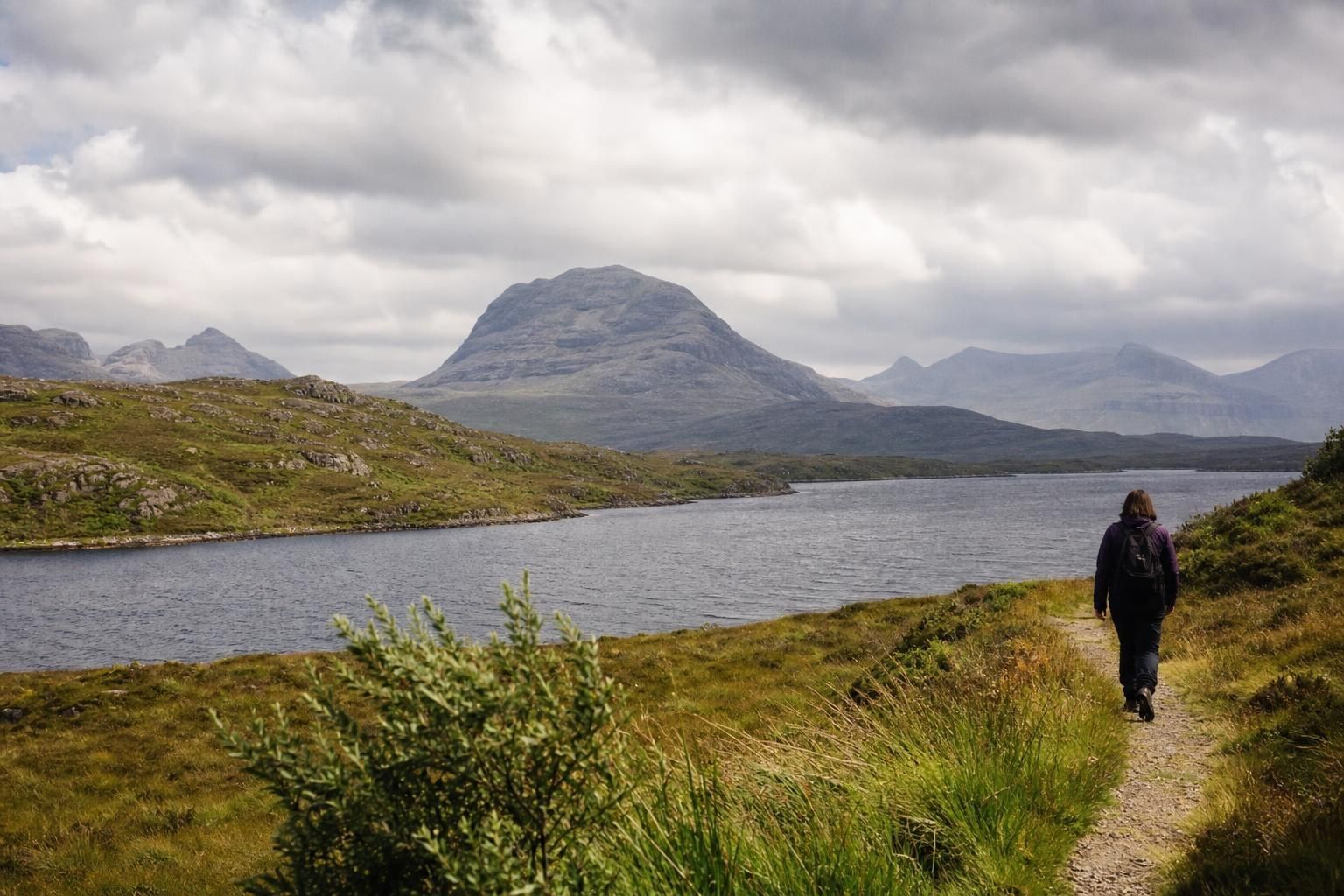
The summer landscape is startlingly green. Lupine fields bloom in purple waves across lava fields. Waterfalls like Skógafoss and Seljalandsfoss run at full force from glacial melt. Temperatures hover between 10°C and 15°C, occasionally reaching 20°C on a generous day. You will not need heavy winter gear, but layering remains essential because Icelandic weather shifts quickly, sometimes cycling through sun, rain, and wind within a single hour.
Tourist arrivals reached 222,636 in June 2026, making it the busiest month of the year. That volume means popular sites along the South Coast and Golden Circle can feel congested between 10 AM and 4 PM. Strategic timing helps: visiting Geysir at 8 AM or Jökulsárlón glacier lagoon after 6 PM gives you a dramatically quieter experience.
Accessing the Highlands via F-Roads and Gray Line Tours
The Highlands are Iceland's interior wilderness, a vast volcanic desert of rhyolite mountains, hot springs, and river crossings that remains entirely inaccessible from October through May. F-roads, the rugged unpaved tracks that lead into this terrain, require a 4x4 vehicle and genuine driving confidence. River fording is common, and conditions change rapidly.
For travelers who prefer not to wrestle a Land Cruiser across a glacial river, Gray Line Iceland operates scheduled bus tours to Landmannalaugar and Þórsmörk, two of the Highlands' most spectacular areas. Landmannalaugar's geothermal pools sit surrounded by mountains streaked in ochre, green, and rust. Þórsmörk is a sheltered valley ringed by glaciers, accessible only through multiple river crossings. These are not places you stumble upon. They require planning, and summer is the only window.
If you do rent a 4x4 and tackle the F-roads yourself, rental costs in Iceland vary significantly by season and vehicle class. A capable SUV in July will run between $150 and $250 per day from major agencies. Budget accordingly.
Wildlife Encounters: Puffin Nesting and Gentle Giants Whale Watching
Atlantic puffins arrive in Iceland by mid-April and stay through mid-August. The largest colony, home to roughly 40 percent of the world's Atlantic puffin population, nests on the Westman Islands off the South Coast. Látrabjarg cliffs in the Westfjords offer another prime viewing spot where puffins perch close enough to observe without binoculars.
Whale watching peaks from June through August. Húsavík, a small town on the north coast, has earned its reputation as Iceland's whale watching capital. Gentle Giants, one of the most established operators there, runs tours on traditional oak boats and carbon-neutral electric vessels. Humpback whales are the most common sighting, but blue whales, minke whales, and white-beaked dolphins also frequent these waters. Success rates for whale sightings in summer hover around 97 to 99 percent, making this one of the most reliable whale watching destinations anywhere.
These wildlife encounters are exclusive to summer. If puffins or whales rank high on your list, the season chooses itself.
Winter in Iceland: Northern Lights and Glacial Blue Ice
Winter in Iceland stretches from November through March, with December and January as the darkest and coldest months. The limited daylight, sometimes just 4 to 5 hours of a dim, bluish glow, can feel disorienting at first. But that darkness is the entire point. It is the canvas on which the aurora borealis paints, and it is the condition that creates the crystal ice caves inside Vatnajökull glacier.
The winter landscape is stark and monochromatic: black lava fields dusted with snow, frozen waterfalls, and steam rising from hot springs into frigid air. There is a severity to it that many travelers find deeply compelling. You will not see the green hillsides or wildflower meadows of summer. Instead, you get a raw, elemental version of Iceland that feels closer to the geological forces that built it.
Winter travel demands more preparation and flexibility. Roads close without warning. Daylight is precious and must be planned around. But the rewards are singular. You cannot see the northern lights in summer. You cannot enter the blue ice caves in summer. These experiences exist only in the cold and dark months, and 65% of recent tourism growth has shifted toward the winter season, a clear signal that travelers increasingly recognize what winter offers.
Hunting the Aurora Borealis with Arctic Adventures
The northern lights are not guaranteed. They depend on solar activity, cloud cover, and your willingness to stay up late and drive away from Reykjavík's light pollution. The aurora season runs from September through March, with peak darkness and activity typically falling between November and February.
Arctic Adventures, one of Iceland's largest and most reputable tour operators, runs dedicated northern lights tours by bus and super jeep. Their guides monitor aurora forecasts and cloud cover maps in real time, adjusting routes to find clear skies. Tours typically depart Reykjavík between 9 and 10 PM and return around 1 AM. On a strong display night, the lights ripple across the sky in green, purple, and white curtains that shift and pulse. On a quiet night, you may see a faint green band or nothing at all.
Your best strategy is to book multiple nights in Iceland and plan for at least two or three aurora attempts. A single-night window is a gamble. Staying in rural accommodations away from city lights, such as guesthouses along the Snæfellsnes Peninsula or near Vík, significantly improves your odds.
Exploring Vatnajökull Crystal Ice Caves with Local Guide
Vatnajökull, Europe's largest glacier, conceals a network of ice caves that form naturally each autumn as meltwater carves tunnels through the glacier's interior. These caves are accessible only from November through March, and their shape, size, and color change every year. No two seasons produce the same cave.
Local guide companies based in Jökulsárlón, such as Local Guide of Vatnajökull, lead small groups into the caves daily. Tours typically last 2.5 to 3 hours and require crampons and helmets, both provided. The interior of a healthy ice cave glows an intense blue, the result of compressed glacial ice filtering out all wavelengths of light except blue. Photographs from inside these caves are genuinely extraordinary, even from a phone camera.
These tours book out weeks in advance, particularly around the Christmas and New Year period. If an ice cave visit is a priority, securing your spot early is essential. The cost of a trip to Iceland increases quickly when last-minute bookings are involved, and ice cave tours are no exception.
Cost and Crowd Comparison: Data-Driven Travel Insights
Iceland is an expensive destination regardless of season, but the gap between summer and winter costs is meaningful. Accommodation in Reykjavík during July averages 30 to 50 percent more than the same room in February. A mid-range hotel room that runs $180 per night in winter may climb to $260 or $300 in peak summer. Guesthouses and farm stays outside the capital show similar seasonal swings.
Crowds follow the same pattern. June through August accounts for the majority of annual arrivals, and popular sites like the Golden Circle, Blue Lagoon, and Jökulsárlón can feel congested. Winter offers a dramatically different experience: fewer travelers, shorter queues, and a quieter atmosphere at nearly every attraction. The tradeoff is reduced daylight and more weather-related disruptions.
Dining costs remain relatively stable year-round. A sit-down dinner for two in Reykjavík will run between $80 and $140 regardless of season. Grocery store cooking, a common strategy for budget-conscious travelers staying in guesthouses with kitchens, costs roughly $50 to $70 per day for a couple.
Peak vs. Off-Peak Pricing for Icelandair and Blue Car Rental
Icelandair, the national carrier and the airline most travelers use to reach Keflavík, adjusts fares significantly by season. A round-trip economy ticket from the U.S. East Coast in July 2026 typically runs $700 to $1,100. The same route in February drops to $400 to $650. Icelandair also offers free stopovers of up to seven days on transatlantic routes, a feature worth considering if you are connecting through Iceland on the way to continental Europe.
Car rental follows a similar curve. Renting a car in Iceland during summer months costs considerably more than in winter, with a compact car in July running $80 to $120 per day from agencies like Blue Car Rental. That same vehicle in January drops to $40 to $70 per day. However, winter rentals require a 4x4 for safety on icy roads, which pushes the daily rate back up to $100 to $160. Insurance options and gravel protection add further to the total, and we strongly recommend full coverage in winter given the road conditions.
A rough budget framework for a 7-night trip for two:
- Summer (mid-range): $5,500 to $8,000 including flights, car, accommodation, and activities
- Winter (mid-range): $4,000 to $6,500 including flights, car, accommodation, and activities
These ranges assume mid-range hotels or quality guesthouses, a rental car, and 3 to 4 guided excursions.
Weather and Logistics: 12°C Breezes vs. -10°C Arctic Blizzards
Summer weather in Iceland is cool, windy, and changeable. Expect temperatures between 8°C and 15°C along the coast, with occasional warmer days inland. Rain is frequent but rarely heavy. Wind is the constant companion: it affects drone photography, hiking comfort, and your general mood if you are not prepared for it. Pack layers, a windproof outer shell, and waterproof hiking boots. You will not need thermal underwear or heavy insulation.
Winter weather is a different proposition entirely. Coastal temperatures hover between -5°C and 5°C, but wind chill can push the effective temperature well below -10°C. Inland and at higher elevations, conditions are harsher. Blizzards close roads, sometimes for days. The Icelandic Road Administration (Vegagerðin) updates road conditions in real time on road.is, and checking this site becomes a daily habit in winter.
Driving logistics shift dramatically between seasons. Summer driving on the Ring Road is straightforward, with long daylight hours and generally clear roads. Winter driving requires studded tires (included with most winter rentals), constant weather monitoring, and a willingness to alter plans when conditions deteriorate. Travelers frequently discuss winter road conditions and share real-time updates in online forums, which can be a useful supplement to official sources.
One practical consideration that many first-time visitors overlook: fuel stations in rural Iceland are spaced far apart. In winter, when detours are common and visibility poor, keeping your tank above half is a basic safety measure. Carry snacks, water, and a charged phone with offline maps regardless of season.
Final Evaluation: Which Season Matches Your Travel Style?
The question of choosing between summer and winter in Iceland is ultimately a question about what kind of traveler you are and what you want from this particular trip.
Choose summer if you want maximum access to the landscape: Highlands, Westfjords, remote fjords, puffin colonies, whale watching, and 20-plus hours of daylight for driving and hiking. Summer suits travelers who want to cover a lot of ground, see wildlife, and experience Iceland's green, alive side. It is a strong fit for first-time visitors who want the broadest possible introduction to the country.
Choose winter if the northern lights and ice caves are non-negotiable priorities, if you prefer fewer crowds, and if you are comfortable with short days and unpredictable weather. Winter suits travelers who value atmosphere and singular experiences over geographic breadth. It rewards patience, flexibility, and a willingness to slow down.
Both seasons offer distinct advantages that align with different travel personalities, and there is no wrong answer, only a better fit for your specific trip.
At NuVia Travel, we help clients sort through exactly these kinds of decisions. Stefan Terwindt has planned Iceland itineraries across every month and knows which lodges hold up in February storms, which whale watching operators run the most responsible tours, and how to sequence a Ring Road trip so you are not fighting crowds at every stop. If you would rather have someone handle the logistics, local vetting, and realistic pacing for your Iceland trip, Start Your Custom Journey and we will build something that fits your season, your style, and your budget.