What Happens After You Hire a Travel Advisor for Europe
You have chosen your advisor and paid the planning fee. Now what? For most travelers, the moment after hiring a European travel advisor is a bit of a mystery. You know the end result should be a well-organized trip, but the middle steps - the research, the supplier calls, the behind-the-scenes coordination - remain invisible. That gap between "yes, let's do this" and "here's your boarding pass" is where the real work happens, and understanding it helps you get the most from the relationship.
This article walks through the complete lifecycle of working with a travel advisor for a European trip: from the first design conversation through post-trip follow-up. Whether you are planning a 25th anniversary along the Amalfi Coast or a multi-generational family trip through Switzerland and Austria, the process follows a similar arc. Knowing what to expect at each stage means you can participate more effectively, ask better questions, and ultimately travel with greater confidence.
The timeline below reflects how firms like NuVia Travel, a boutique advisory based in Atlanta, typically structure the planning process for complex European itineraries. Your experience may vary by advisor, but the broad phases remain consistent across the industry.
Initial Design Phase: From Discovery Call to Custom 2027 Itinerary
The planning process begins not with flights or hotels but with a conversation. Your advisor's first objective is to understand what kind of travelers you are, what you have done before, and what you hope this trip will feel like. This is more diagnostic than transactional. A skilled advisor is listening for preferences you may not even articulate directly: your tolerance for walking, your interest in food versus art, your comfort level with unfamiliar languages.
At NuVia Travel, founder Stefan Terwindt - a Dutch-born advisor with Austrian roots who speaks five languages - often conducts these calls himself. That multilingual, multicultural background proves especially useful when designing itineraries across countries where local nuance shapes the traveler experience. The discovery call typically runs 45 to 60 minutes and covers destinations, pace, budget, physical considerations, dietary needs, and any fixed dates like a birthday dinner in Paris or a family wedding in Tuscany.
Defining Your European Travel Persona and Budget Parameters
Your "travel persona" is a shorthand your advisor builds from your answers. Are you a slow traveler who wants three nights in each city, or do you prefer covering more ground? Do you gravitate toward boutique properties with 30 rooms, or do you feel more comfortable in a well-known brand like Marriott or Hilton? Do you want every dinner pre-arranged, or do you prefer spontaneity in the evenings?
Budget parameters are discussed openly at this stage. A strong advisor will not simply ask "what do you want to spend?" but will frame realistic ranges. A two-week trip through Italy and Greece for two travelers in premium accommodations typically runs $12,000 to $25,000 depending on season, property tier, and activity choices. Your advisor uses these parameters to build a trip that feels generous without being wasteful.
The 48-Hour Turnaround: Reviewing Initial Route Concepts
Within 48 hours of the discovery call, you should receive a preliminary route concept. This is not a finished itinerary. It is a skeleton: city sequence, approximate night counts, transportation method between stops, and a short rationale for each choice.
For example, your advisor might suggest flying into Zurich, training to Lucerne for two nights, then continuing by rail to Interlaken before crossing into Austria's Tyrol region. The rationale might note that this routing avoids doubling back, places the most physically active days early in the trip, and positions you near Innsbruck for a day trip to the Swarovski Crystal Worlds - a site that consistently delights travelers who were not expecting to enjoy it. You review, react, and refine. Most itineraries go through two to three revision cycles before moving to the booking phase.
The Booking Engine: Leveraging Preferred Partner Networks
Once you approve the route concept, your advisor shifts into procurement mode. This is where the professional network becomes your greatest asset. Travel advisors affiliated with consortia like Virtuoso, Signature Travel Network, or Travel Leaders Group have access to preferred rates, room upgrades, and amenity packages that are simply not available through online booking platforms.
Securing VIP Perks at Belmond, Aman, and Four Seasons Properties
Properties in the Belmond portfolio - including the legendary Hotel Cipriani in Venice and the Belmond Villa San Michele in Florence - offer consortium-affiliated advisors complimentary breakfast, room upgrades upon availability, spa credits, and early check-in. These perks are automatically applied when your advisor books through the preferred channel. You pay the same rate (or sometimes less) than you would booking directly on the hotel's website, but you receive $200 to $500 in added value per stay.
The same applies to Four Seasons properties across Europe. A booking at the Four Seasons Hotel George V in Paris through a Virtuoso advisor includes daily breakfast for two, a $100 hotel credit, and a potential suite upgrade. Aman resorts, known for their privacy-focused design, extend similar courtesies. These benefits compound across a multi-stop itinerary. Over a 12-night European trip with three or four premium hotel stays, the cumulative value of these perks often exceeds $1,500.
Coordinating Logistics with Viking River Cruises and Rail Europe
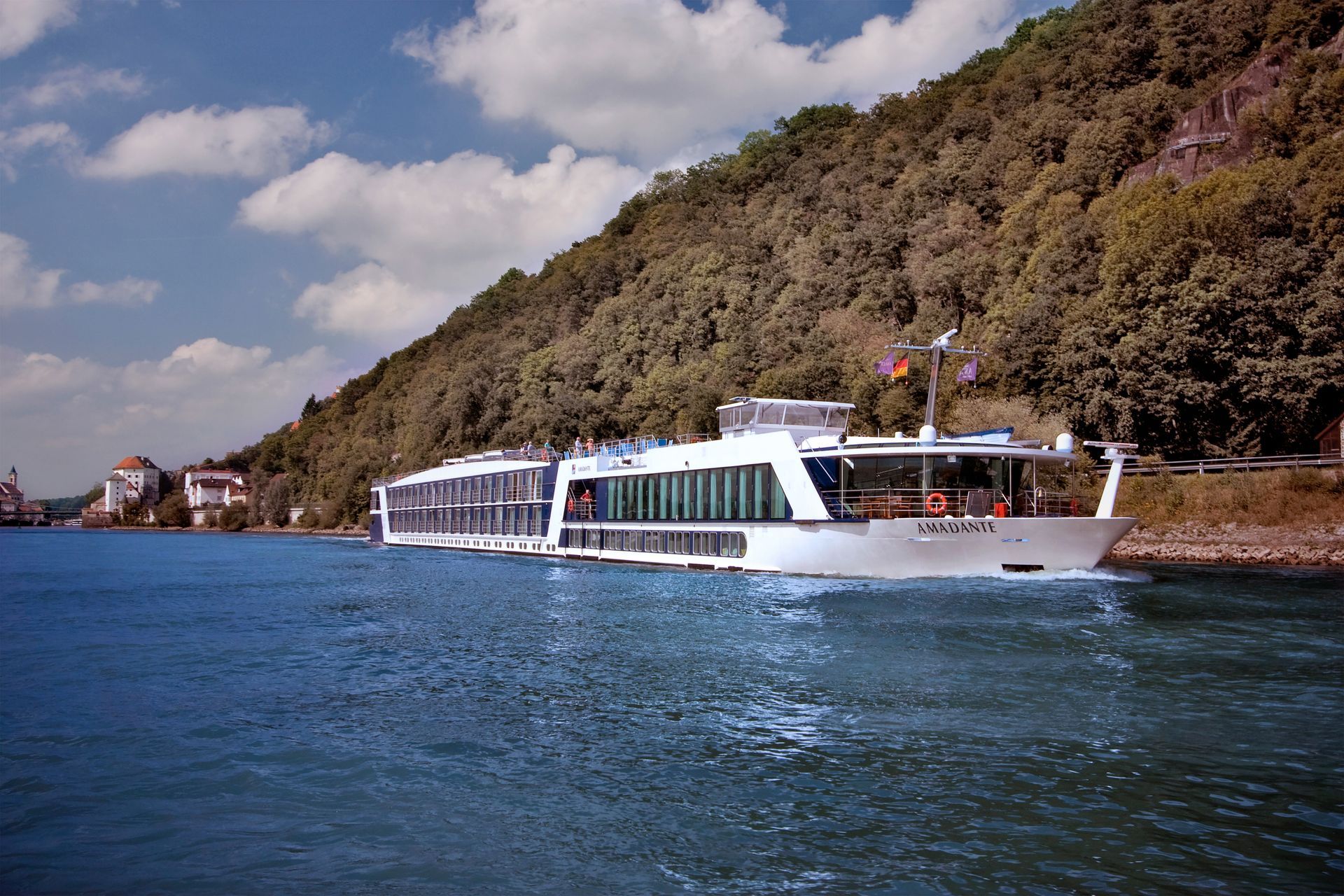
Many European itineraries blend land-based stays with a river or Mediterranean cruise segment or extensive rail travel. Your advisor coordinates these moving parts so they connect without friction. A Viking River Cruises Danube itinerary, for instance, might be paired with pre-cruise nights in Budapest and post-cruise days in Prague, with private transfers bridging each segment.
Rail bookings through Rail Europe require attention to specific train classes, reservation requirements (mandatory on many high-speed routes like the TGV or Frecciarossa), and platform logistics at major stations. Your advisor handles seat selection, ensures connections allow adequate transfer time, and flags situations where a private car transfer makes more sense than a train - such as the route from Florence to the hilltop towns of southern Tuscany, where rail service is limited.
The Value Framework: Advisor Pricing vs. DIY Booking Data
A common question is whether hiring a travel advisor actually saves money or simply adds a layer of cost. The answer depends on how you define value, but the data consistently favors the advisor model for complex European trips.
Evaluating Time Savings: 20-30 Hours of Research Reclaimed
Research from the American Society of Travel Advisors indicates that planning a multi-city European trip independently requires an average of 20 to 30 hours of research and planning. That includes comparing hotels, reading reviews, mapping logistics, booking trains, reserving restaurant tables, purchasing museum tickets, and troubleshooting visa or documentation requirements.
Travel advisors spend an average of 12 to 15 hours on the post-booking, pre-departure phase alone for complex European itineraries. They absorb this work so you do not have to. For a busy professional, a retiree with limited patience for browser tabs, or a couple who would rather spend their evenings anticipating the trip than planning it, this time savings is the single most compelling reason to hire an advisor.
Pre-Departure Logistics and Digital Concierge Integration
The six to eight weeks before departure are when your advisor's attention to detail becomes most visible. This phase covers everything from airport transfers to restaurant reservations to ensuring your travel documents are current.
Finalizing Private Transfers and Skip-the-Line Museum Access
Private airport transfers in European cities typically cost $80 to $150 each way, depending on the city and vehicle type. Your advisor arranges these in advance, providing driver contact information, meeting point instructions, and backup plans in case of flight delays. This removes the single most stressful moment of international travel: arriving in an unfamiliar city and figuring out ground transportation while jet-lagged.
Skip-the-line access for major museums and attractions is another area where advisor involvement pays dividends. The Vatican Museums, the Uffizi Gallery in Florence, and the Acropolis Museum in Athens all offer timed-entry or priority-access tickets that sell out weeks in advance. Your advisor secures these during the optimal booking window. For sites like the Borghese Gallery in Rome, where entry is limited to 360 visitors every two hours, advance booking is not optional - it is mandatory.
Syncing Your Itinerary to Mobile Apps like Axus or Travefy
Most modern travel advisors deliver your final itinerary through a mobile app rather than a printed document. Platforms like Axus and Travefy allow your advisor to build a day-by-day itinerary that syncs to your phone, includes maps, confirmation numbers, contact details for every supplier, and even restaurant menus.
This means you arrive in Lisbon and open your phone to see the day's schedule: morning walking tour of Alfama at 9:30 a.m., lunch reservation at Belcanto at 1:00 p.m., free afternoon for exploring, and a Fado performance at 8:30 p.m. with the venue address pre-loaded into Google Maps. The app updates in real time, so if your advisor makes a change - say, moving a dinner reservation because the restaurant shifted its hours - you see it immediately. No email chains, no confusion, no printing revised documents at the hotel business center.
In-Country Support: Real-Time Problem Solving Across Time Zones
This is where the advisor relationship proves its worth most dramatically. A flight cancellation at Heathrow. A medical issue in rural Provence. These situations happen, and they happen at inconvenient hours.
Your advisor serves as a single point of contact who can coordinate with airlines, hotels, transfer companies, and local guides simultaneously. When a 2025 air traffic controller strike grounded flights across southern France, advisors with clients on the ground were rebooking trains, extending hotel stays, and rerouting itineraries within hours. Independent travelers were standing in airport queues refreshing airline apps.
The time zone factor is real. If you are in Rome and it is 3:00 p.m. local time, your U.S.-based advisor is available during their morning hours. If a crisis hits at 10:00 p.m. European time, most advisory firms have after-hours emergency protocols. At NuVia Travel, clients receive a direct mobile number for urgent situations, ensuring they are never left without support.
Local relationships also matter here. An advisor who has personally walked the streets of Dürnstein in Austria's Wachau Valley or tasted Riesling in Rüdesheim along the Rhine knows the terrain differently than someone working from a database. When a local guide cancels or a recommended restaurant closes unexpectedly, your advisor can draw on firsthand knowledge to suggest alternatives that match your preferences - not just the first option that appears in a search result.
The financial protection is worth noting as well. Advisors who book through preferred supplier channels often have more direct escalation paths than individual consumers. A hotel that might tell you "sorry, we are fully committed" will often find a solution when the request comes through a consortium partner who sends them dozens of bookings annually.
Post-Trip Follow-up and 2027 Future Travel Planning
The relationship does not end when you land back home. A thoughtful advisor follows up within a week of your return to debrief: what exceeded expectations, what fell short, and what you would do differently. This feedback loop improves future trips and helps your advisor refine their understanding of your preferences.
Many clients find that their first trip with an advisor opens a new way of thinking about travel. The couple who booked a 10-day Italy trip for their anniversary returns to discuss a Christmas markets cruise on the Danube. The family that explored London and Paris with adult children begins planning a multi-generational trip to Portugal's Douro Valley. Each subsequent trip requires less discovery because your advisor already knows your pace, your taste in hotels, and your tolerance for crowds.
Planning for 2027 and 2028 European travel is already well underway at most advisory firms. Popular river cruise departures on lines like AmaWaterways and Avalon Waterways sell out 12 to 18 months in advance, particularly for peak-season sailings in June and September. Premium hotel suites in high-demand destinations like the Amalfi Coast, Santorini, and the Swiss Alps follow a similar pattern. Your post-trip debrief is the ideal moment to secure your next trip while availability remains strong.
The long-term value of an advisor relationship compounds over time. Your second trip is planned faster because the groundwork exists. Your third trip benefits from two rounds of refined preferences. By the fourth or fifth trip, your advisor can anticipate your needs before you articulate them - suggesting a property in the Algarve you had not considered, or recommending a lesser-known Prosecco region in the Veneto hills that perfectly matches your evolving taste.
If you have been considering professional help for your next European trip, the process is more structured, more valuable, and more personally attentive than most travelers expect. Your advisor handles the complex logistics and local vetting so you can focus on the experience itself. Start your custom journey with a discovery call, and see how the process unfolds from there.