How Far in Advance to Plan a Trip to Europe?
For a summer 2027 trip to major cities like Paris, Rome, or Barcelona, start planning 12 months out - and book transatlantic airfare as soon as schedules open 11 months before departure.
Planning a trip to Europe for 2027 requires more than just picking destinations and packing a bag. The timing of your bookings - flights, hotels, rail passes, landmark tickets, and even river cruises - can mean the difference between securing your first-choice itinerary and settling for whatever remains. If you are wondering how far ahead to book a 2027 Europe trip, the short answer is: earlier than you think. But the longer answer depends on what you are booking, when you plan to travel, and how flexible your dates can be. This guide breaks down the specific timelines, release windows, and deadlines you need to know so that every piece of your 2027 European itinerary falls into place without unnecessary stress or inflated costs.
The Optimal Booking Timeline for 2027 European Travel
The single biggest mistake travelers make is assuming that all bookings follow the same timeline. They do not. Flights, accommodations, rail tickets, and attraction reservations each operate on distinct schedules, and understanding these windows is the foundation of a well-planned trip. A general rule of thumb: the more popular the destination and the more fixed the capacity, the earlier you need to act.
For a summer 2027 trip to major cities like Paris, Rome, or Barcelona, your booking process should begin in the summer of 2026. That gives you a full 12 months to lock in flights at reasonable rates, secure hotel rooms before peak-season surcharges take hold, and reserve spots at landmarks that cap daily visitors. For shoulder-season travel (April through May, or September through October), you can afford a slightly shorter runway - roughly 8 to 10 months - but waiting beyond that still carries risk.
The 11-Month Rule for International Airfare
Most major airlines release their international schedules approximately 11 months before departure. This means flights for July 2027 typically become bookable around August 2026. Airlines including Delta, United, Lufthansa, and Air France follow this pattern, though exact dates shift slightly each year.
The sweet spot for purchasing transatlantic flights tends to fall between 3 and 6 months before departure for economy class, and 6 to 9 months for premium cabins. Business class and premium economy seats on popular routes - Atlanta to Rome, New York to London, Chicago to Paris - sell out faster because inventory is limited. If you are flying during summer or over the December holidays, booking within the first few weeks of schedule release is wise, especially for direct routes.
Global airfare data shows that flight costs are expected to remain relatively stable through 2026, which suggests that 2027 fares will not spike dramatically at release. Still, stable does not mean cheap. Waiting until the last minute for peak-season transatlantic flights almost always results in higher fares and fewer seat options.
Early Bird vs. Last Minute: A 2027 Cost Comparison
The financial case for early booking is straightforward. A round-trip economy ticket from the eastern United States to Western Europe purchased 6 months out might run $800 to $1,100 during shoulder season. Wait until 6 weeks before departure in July, and that same route can jump to $1,400 or more.
Hotels tell a similar story. A well-reviewed four-star property in Florence might offer rates of €180 per night when booked 9 months ahead, but that same room during peak season with only 6 weeks' notice could climb above €280. The pattern holds across accommodation types, from boutique guesthouses in Bruges to waterfront hotels in Dubrovnik.
Early-bird deals from river cruise lines and tour operators can save travelers thousands of dollars compared to booking the same cabin or itinerary later. Viking, AmaWaterways, and Avalon Waterways all offer early-booking incentives that typically disappear 6 to 8 months before sailing.
Last-minute deals do exist, but they come with significant trade-offs: limited cabin selection, less desirable room categories, and itineraries that may not match your preferences. For travelers planning a milestone anniversary, retirement celebration, or multi-generational family trip, those trade-offs rarely feel worth the gamble.
Securing Premium Accommodations and High-Speed Rail
Your hotel and rail bookings form the backbone of daily logistics in Europe. Getting these right - and getting them early - determines whether your trip flows smoothly or becomes a series of compromises.
Booking Boutique Stays and Luxury Chains via Marriott and Accor
Europe's hotel landscape splits broadly into two categories: international chains (Marriott Bonvoy, Accor, Hilton, IHG) and independent boutique properties. Each requires a different booking strategy.
Major chain hotels generally allow bookings 12 months in advance, and loyalty program members often receive early access or preferential cancellation policies. If you hold Marriott Bonvoy Platinum status or Accor Gold status, you can lock in flexible rates early and adjust later without penalty. This is especially valuable for cities like Venice, Santorini, and Amsterdam, where room supply is genuinely limited during summer months.
Boutique hotels and independent properties - a family-run guesthouse in Salzburg's Altstadt, a converted palazzo in Lecce, a canal-side hotel in Ghent - often open their calendars only 6 to 9 months out. These properties tend to have fewer than 30 rooms, so they fill quickly. Set calendar reminders for when your target properties open reservations, and book immediately.
At NuVia Travel, we maintain relationships with vetted boutique properties across Europe, which sometimes allows us to hold rooms or secure preferred-rate access before general availability opens. Stefan Terwindt, our founder, has personally stayed at many of the properties we recommend, and that firsthand experience matters when matching a hotel to a specific traveler's expectations.
Navigating Eurostar and Trenitalia Release Windows
European rail operators release tickets on different schedules, and knowing these windows is critical for locking in the best fares.
- Eurostar (London to Paris, Brussels, or Amsterdam): Tickets typically open 330 days (roughly 11 months) before travel. Standard fares start around €39 one-way when purchased early but can exceed €200 closer to departure.
- Trenitalia (Italy's high-speed Frecciarossa network): Booking opens approximately 120 to 180 days before travel. Early-purchase "Super Economy" fares between Rome and Florence can be as low as €19, compared to €60 or more at the gate.
- SNCF/TGV (France): Tickets release about 4 months before departure. Paris to Lyon or Marseille fares start around €19 with early booking.
- Renfe AVE (Spain): Booking windows open roughly 90 to 120 days ahead, with early fares from Madrid to Barcelona starting near €25.
The key takeaway: set alerts for when each rail operator opens its booking window for your travel dates. First-class rail travel in Europe is genuinely comfortable - wide seats, meal service, and city-center arrivals - and the cost difference between early and late booking can be substantial.
Evaluating Peak vs. Shoulder Season Booking Pressures
Your choice of travel season shapes every aspect of your booking timeline, from how far ahead you need to reserve to how much flexibility you will have once you arrive.
Summer 2027: The 12-Month Lead Time Requirement
June through August is the most popular window for transatlantic travelers, and 2027 will be no exception. European destinations that draw the heaviest summer crowds include the Amalfi Coast, the Greek Islands, Provence, the Swiss Alps, and coastal Croatia.
During these months, hotel availability in popular areas drops sharply by February or March of the travel year. A waterfront room in Positano or a suite overlooking Oia's caldera can be fully booked 10 months in advance. The same applies to popular rental villas in Tuscany or the Dordogne, where families and groups often reserve a full year ahead.
Flights follow a parallel pattern. Direct summer routes from major U.S. hubs to secondary European airports - think Atlanta to Barcelona, or Boston to Lisbon - sell out premium cabins quickly. If a specific flight schedule matters to your itinerary, booking within weeks of schedule release is your safest bet.
For summer 2027, your booking sequence should begin no later than June 2026. Flights first, then accommodations, then rail and attraction tickets as their respective windows open.
Off-Peak Advantages for Flexible Travelers
Shoulder season and winter travel offer a fundamentally different planning experience. If your dates are flexible, traveling in April, May, September, or October gives you more breathing room on every front.
Hotel rates in cities like Vienna, Lisbon, and Prague can drop 25% to 40% compared to July and August. Flight fares soften as well, and you are far more likely to find award availability if you are using frequent flyer miles. Attractions that require timed-entry tickets - the Uffizi, the Colosseum, Versailles - have shorter queues and more available time slots.
The booking timeline for shoulder season is more forgiving. Six to eight months of lead time is usually sufficient for flights and hotels, and 3 to 4 months works for most rail and attraction bookings. That said, do not confuse "more forgiving" with "unlimited." Popular shoulder-season events like Oktoberfest (late September into early October) or the Keukenhof tulip season (March through May) still require early planning.
Reservation Windows for Bucket-List Landmarks and Tours
Some of Europe's most popular experiences operate with strict capacity limits, and failing to book early enough means missing out entirely. This is where advance planning pays off most visibly.
Securing Tickets for the Eiffel Tower and Vatican Museums
Timed-entry ticketing has become standard at Europe's most visited landmarks. The systems exist to manage crowd flow, but they also mean that spontaneous visits are often impossible during peak months.
- The Eiffel Tower summit tickets open approximately 60 days before the visit date. Summer slots sell out within hours of release.
- Vatican Museums and Sistine Chapel tickets open 60 days ahead and are heavily booked throughout the year. Guided early-morning or after-hours tours through licensed operators sell out even faster.
- The Colosseum and Roman Forum use a combined timed-entry ticket that opens 30 to 60 days before the visit. Underground and arena floor access requires a separate, more limited ticket.
- The Alhambra in Granada releases tickets 90 days in advance, and the Nasrid Palaces section frequently sells out for entire weeks during spring and fall.
- Anne Frank House in Amsterdam opens tickets exactly 6 weeks before the visit date, at noon local time. They sell out within minutes.
The strategy is simple but requires discipline: mark your calendar with each attraction's release date and book the moment tickets become available. For travelers managing a multi-city itinerary with several timed-entry bookings, this process can become complex. This is one area where working with a travel advisor who tracks these windows daily saves real time and prevents missed opportunities.
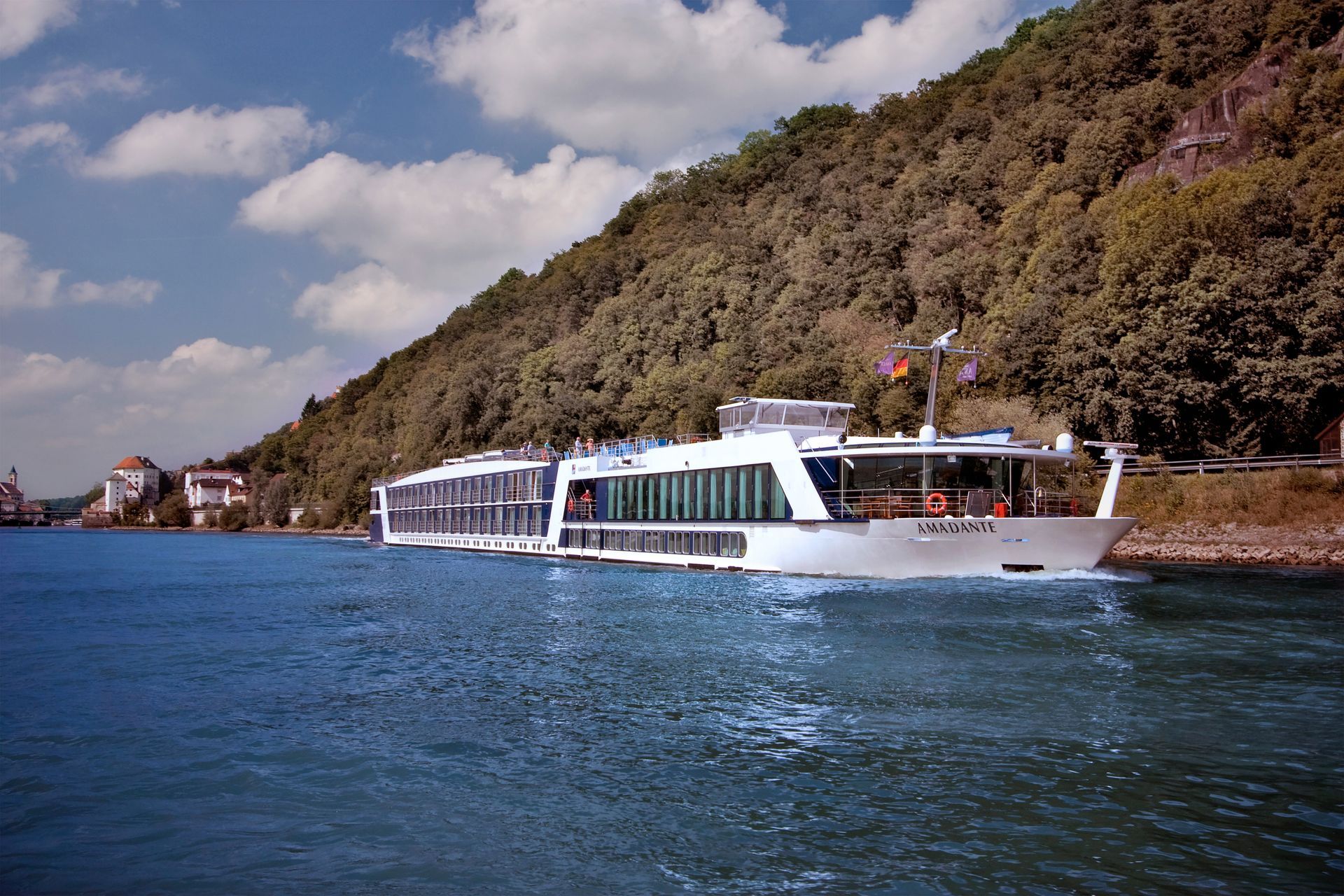
Booking Viking or AmaWaterways River Cruises for 2027
River cruises operate on a longer booking horizon than almost any other component of a European trip. Viking River Cruises, AmaWaterways, Avalon Waterways, and Uniworld typically release their next-year itineraries 12 to 18 months before sailing. Some 2027 Danube, Rhine, and Douro sailings are already available for booking in 2026.
Early booking matters here for three reasons. First, cabin selection: the most desirable staterooms (French balcony suites on the upper deck, for example) go first. Second, early-booking promotions: Viking and AmaWaterways both offer reduced fares, complimentary shore excursions, or waived single supplements for early reservations. Third, specific departure dates: a 7-night Rhine cruise departing during tulip season or a Danube sailing timed to Vienna's Christmas markets will fill months before less popular dates.
If a river cruise is part of your 2027 plans, now is the time to begin researching itineraries and locking in your preferred sailing. We regularly help NuVia Travel clients compare cabin categories, itinerary pacing, and included excursions across multiple cruise lines to find the best match.
A Framework for Prioritizing Your 2027 Booking Sequence
With so many moving parts, a clear sequence prevents overwhelm. Here is the order we recommend for planning a 2027 European trip, whether you are heading to Portugal's Algarve coast or cruising the Moselle Valley through Bernkastel-Kues and Cochem.
- River or ocean cruise (if applicable): 12 to 18 months ahead. Lock in your sailing first, as it anchors your entire itinerary around fixed dates.
- International flights: 8 to 11 months ahead. Book as soon as schedules release for summer travel; 6 to 8 months is acceptable for shoulder season.
- Accommodations: 8 to 10 months ahead for peak season; 5 to 7 months for off-peak. Prioritize limited-inventory boutique properties and high-demand cities.
- High-speed rail: 4 to 6 months ahead, depending on the operator. Set alerts for release dates on Eurostar, Trenitalia, and SNCF.
- Landmark and museum tickets: 2 to 3 months ahead, or as soon as timed-entry windows open. Some attractions release only 30 to 60 days out.
- Restaurant reservations: 2 to 4 months ahead for Michelin-starred or highly popular restaurants; 1 to 2 months for most others.
- Travel insurance: Purchase within 14 days of your first booking to maximize "cancel for any reason" coverage eligibility.
This sequence is not arbitrary. Each step builds on the one before it. Your cruise dates determine your flight dates. Your flight dates determine your pre- and post-cruise hotel stays. Your hotel locations determine which rail routes and attraction tickets you need. Working backward from a fixed anchor point - typically the cruise or the flights - keeps everything aligned.
Stable airfare forecasts through 2026 suggest that you will not face dramatic fare increases by booking a few weeks after schedule release rather than on day one. But capacity on preferred routes is a separate concern. Stable fares do not guarantee seat availability, particularly in premium cabins.
Essential Documentation and ETIAS Deadlines for 2027
Beyond bookings, 2027 brings a significant change to European entry requirements that every U.S., Canadian, Australian, and UK traveler needs to understand.
The European Travel Information and Authorization System (ETIAS) is officially scheduled to become mandatory for visa-exempt travelers from 59 countries in 2027. This pre-travel authorization, similar in concept to the U.S. ESTA system, will require travelers to complete an online application before arriving in the Schengen Area. The fee is expected to be €7 for adults, and the authorization should be valid for three years or until your passport expires, whichever comes first.
ETIAS has been delayed multiple times since its original 2021 target, and the revised timeline now points to a 2027 implementation. Even if the exact launch date shifts again, preparing for it now is the prudent approach. Here is what you should do:
- Ensure your passport is valid for at least 6 months beyond your planned return date. If it expires before January 2028, renew it in 2026.
- Monitor the official ETIAS website for the confirmed launch date and application portal.
- Budget a few minutes for the online application. Most approvals are expected within minutes to 96 hours.
- Do not assume ETIAS replaces a visa. It applies only to travelers from countries that already enjoy visa-free access to the Schengen Area.
Beyond ETIAS, confirm that any country-specific entry requirements (the UK is not part of Schengen, for example) are addressed separately. A trip combining London, Paris, and Rome involves two different entry systems, and overlooking one can cause problems at the border.
Your 2027 Europe Trip Starts Now
The question of how far in advance to plan a 2027 European trip has a clear answer: start in 2026, and start with the components that have the longest lead times. River cruises and flights come first. Hotels and rail follow. Attraction tickets and restaurant reservations fill in the gaps as their windows open.
The travelers who enjoy the smoothest, most comfortable European experiences are not necessarily the ones who spend the most. They are the ones who plan in the right sequence, at the right time, with the right information. A retirement celebration on the Danube, an anniversary week in the Italian Lakes, a family reunion based in Provence - these trips deserve more than a last-minute scramble.
If coordinating flight schedules, hotel release dates, rail booking windows, and ETIAS requirements sounds like a lot to manage on your own, you are not wrong. Our team at NuVia Travel handles exactly this kind of multi-layered planning every day. Start your custom journey and let us build a 2027 itinerary that fits your pace, your priorities, and your timeline.
How far in advance should you plan a trip to Europe?
Begin about 12 months out for summer travel to major cities like Paris, Rome, or Barcelona; 8 to 10 months for shoulder season.
How far in advance do airlines release international flights?
Most major airlines release international schedules approximately 11 months before departure, so July 2027 flights typically become bookable around August 2026.
When should you book popular European landmarks?
The booking window for Europe's most visited landmarks starts around 3 months, but varies. Make sure you know your "must-see" landmarks and add booking windows to your calendar.
When does ETIAS start for 2027 travel?
The European Travel Information and Authorization System (ETIAS) is officially scheduled to become mandatory for visa-exempt travelers from 59 countries in 2027.